What does “1% annual-chance” or “100-year flood” actually mean?
It means a flood of this size has a 1% chance of happening in any given year — every year. It is NOT “once every 100 years.” Over a 30-year mortgage, the chance of seeing at least one such flood is about 26%. The name is a probability, not a schedule.
How do I find my home on the map?
Open the map and type your address into the search bar — it will zoom straight to that spot. If your exact address doesn’t come up, search a nearby landmark or locality instead, then pan and zoom in until you find your building. The blue shading is the modeled 100-year flood; if it covers your rooftop, your building sits inside the floodplain. Click any point to read the modeled flood depth there — how much water that spot would see in a 1% (100-year) event. It’s ~30 m data, so read it as “this building/area could flood,” not an exact figure for one wall.
What do the colours on the map mean?
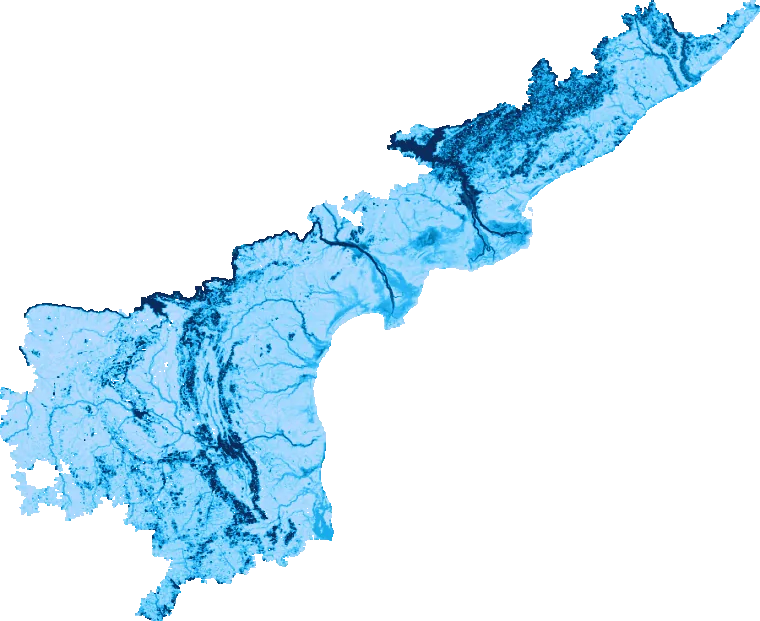
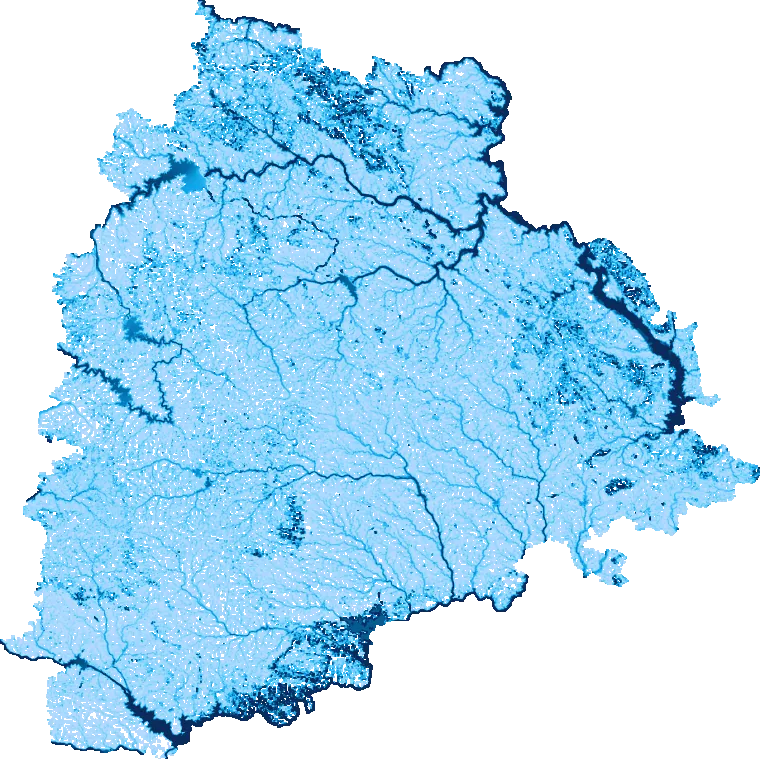
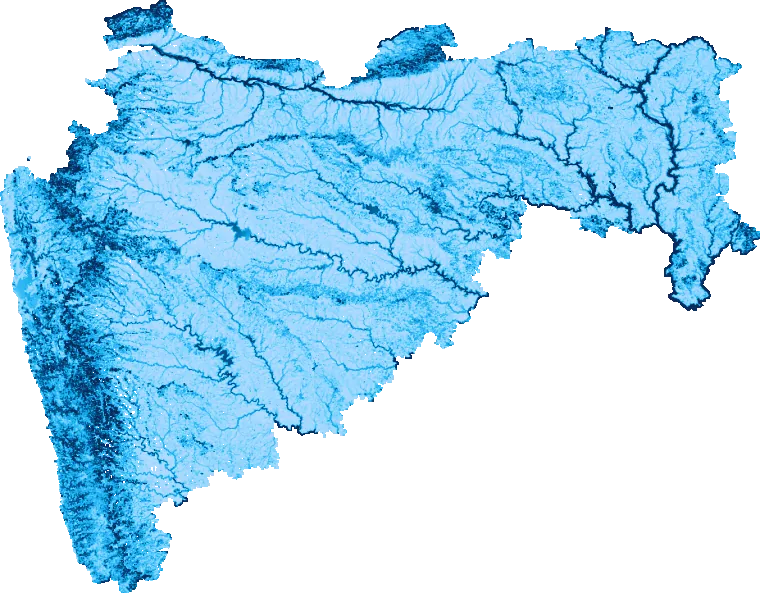
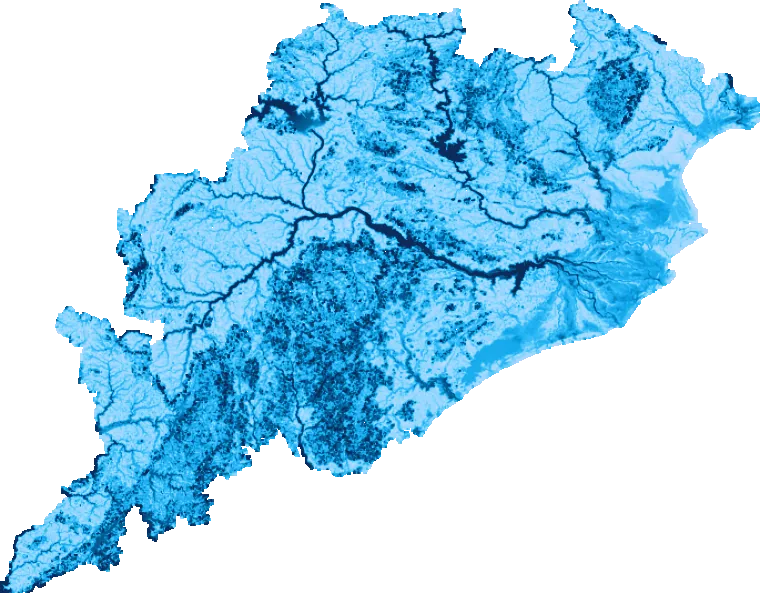
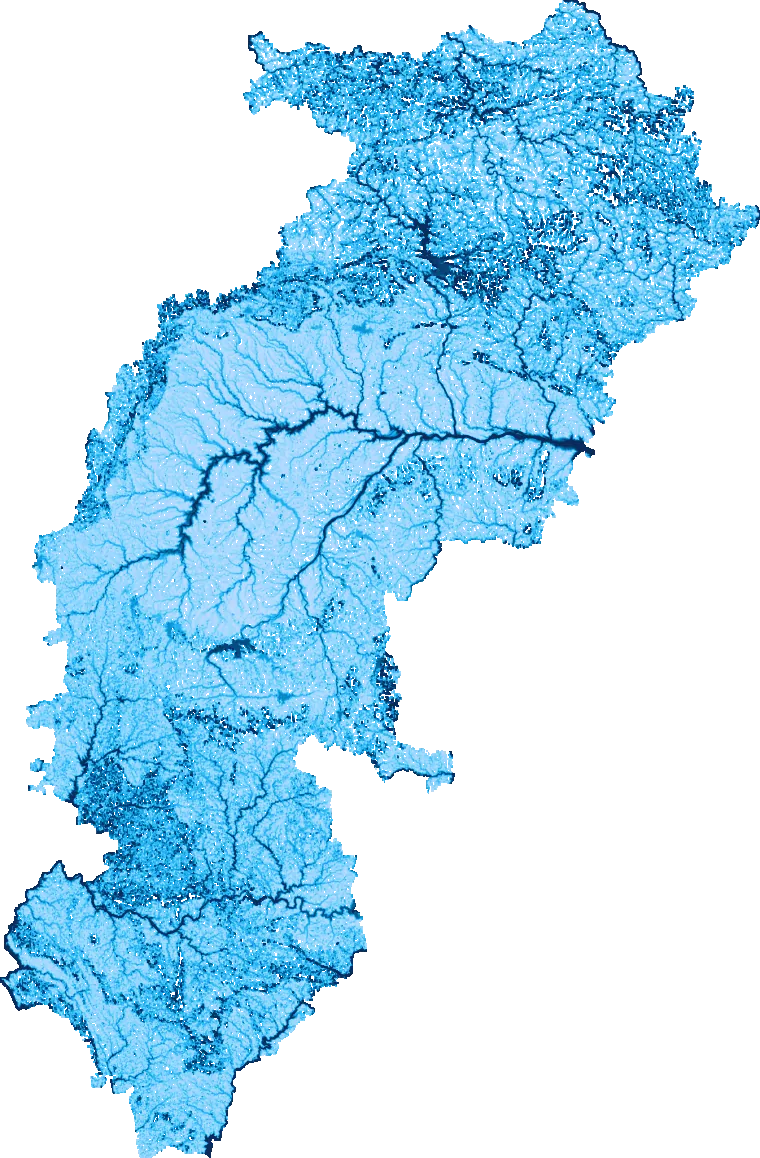
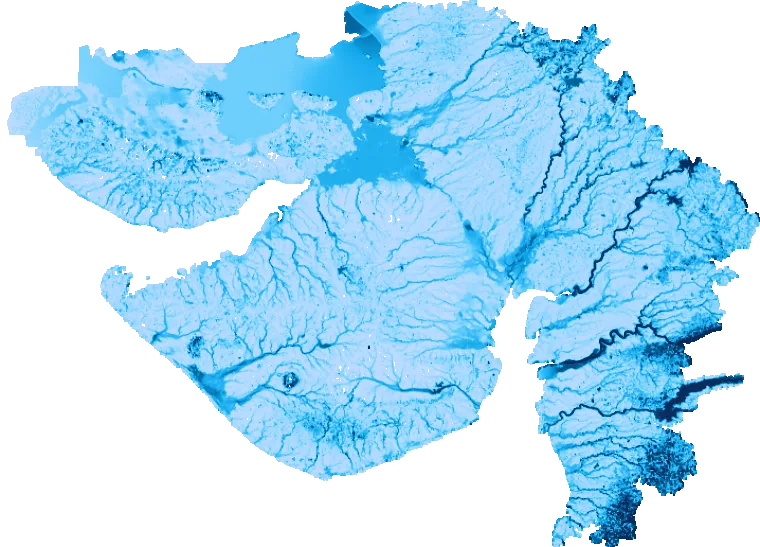
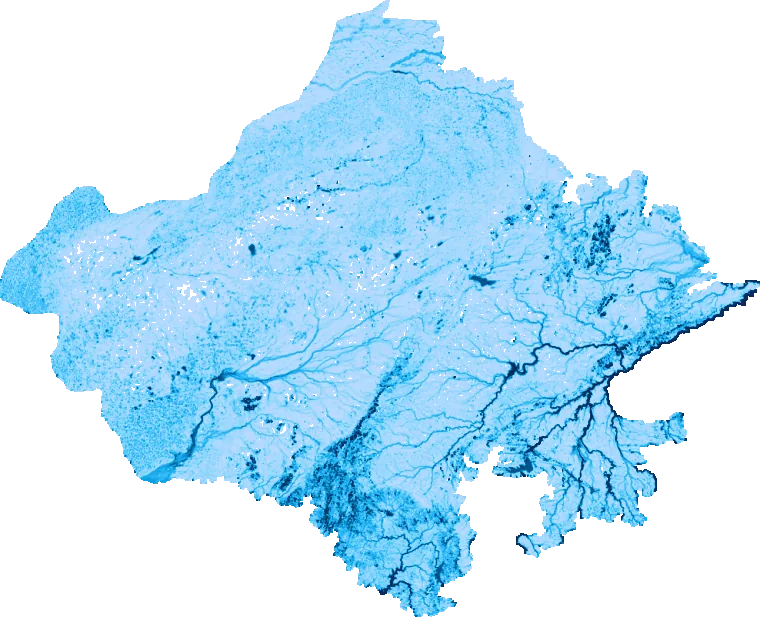
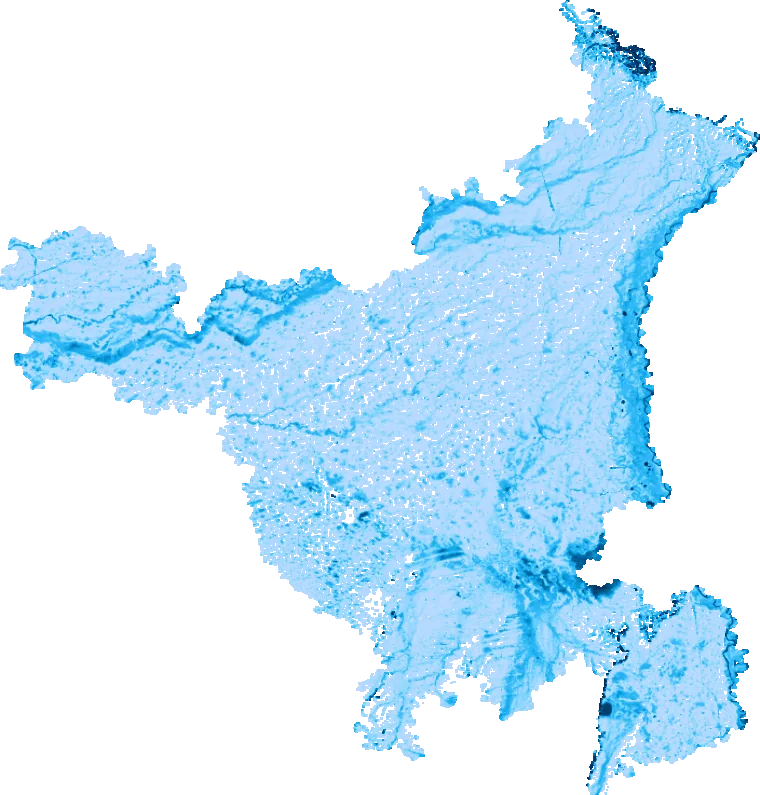
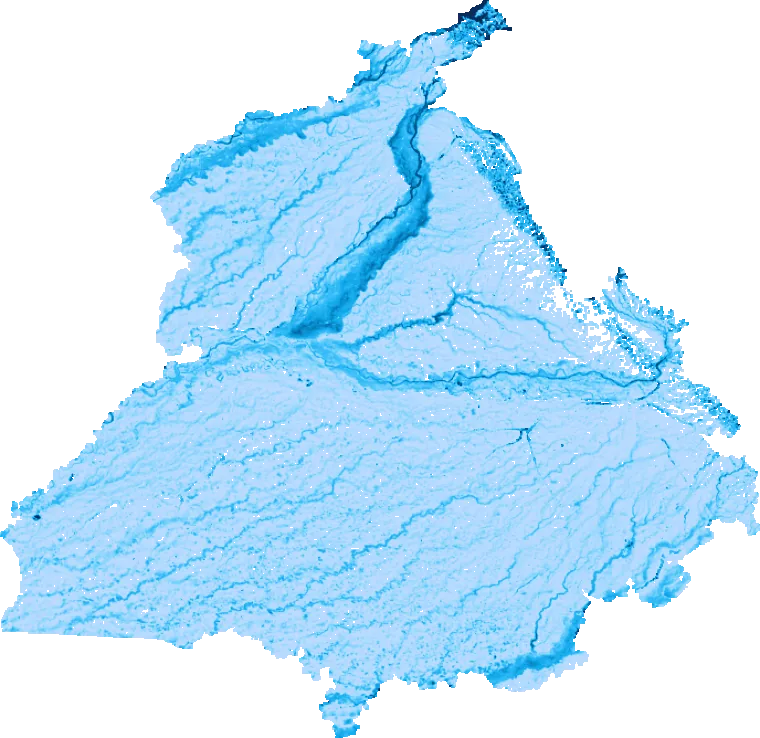
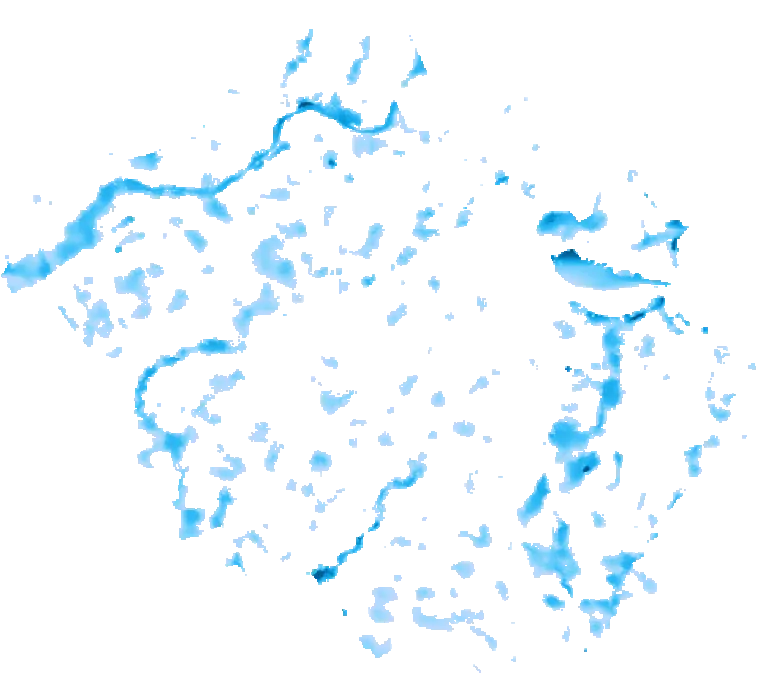
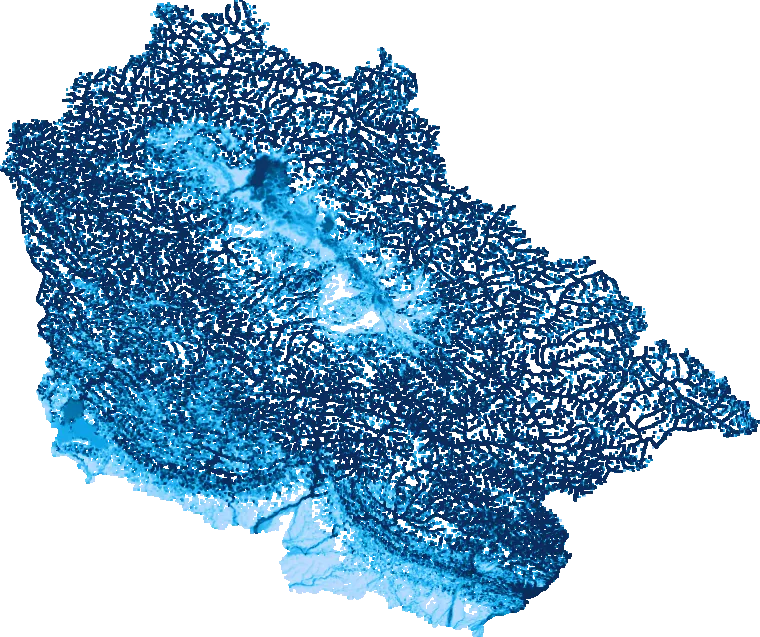
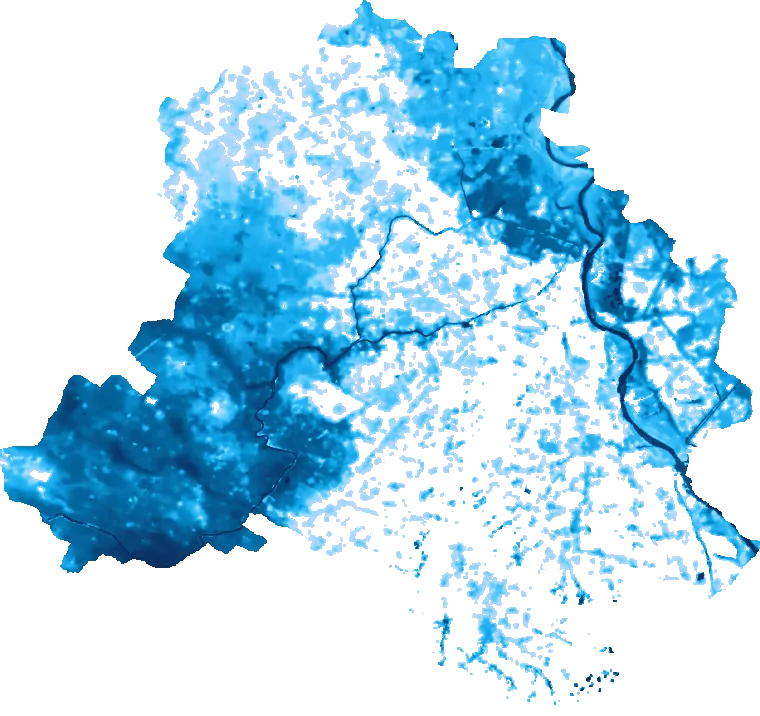
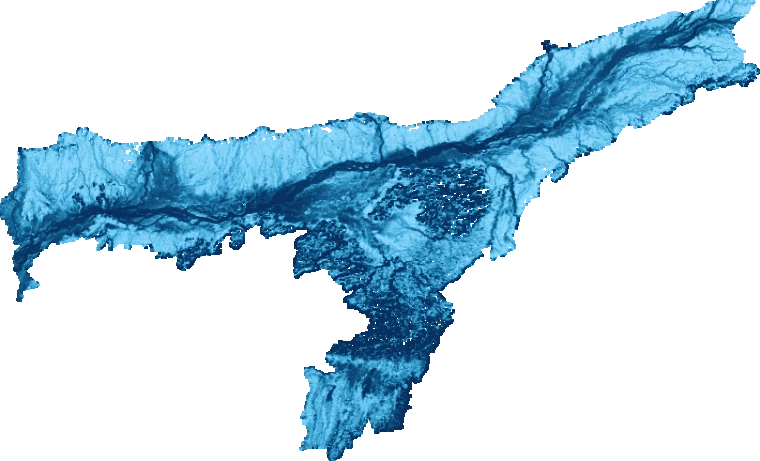
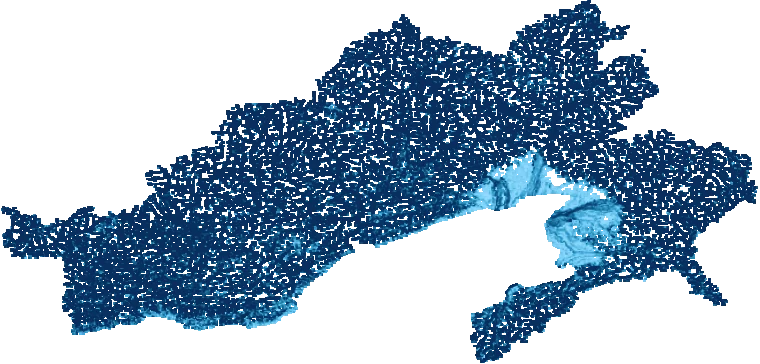
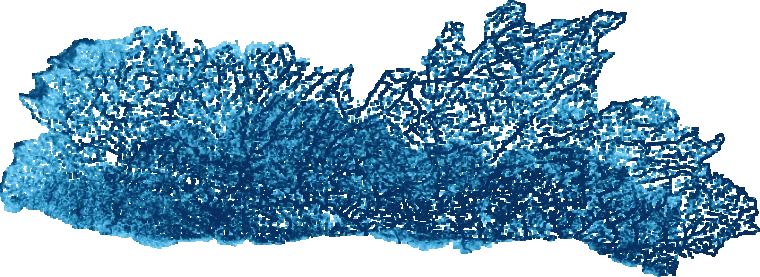
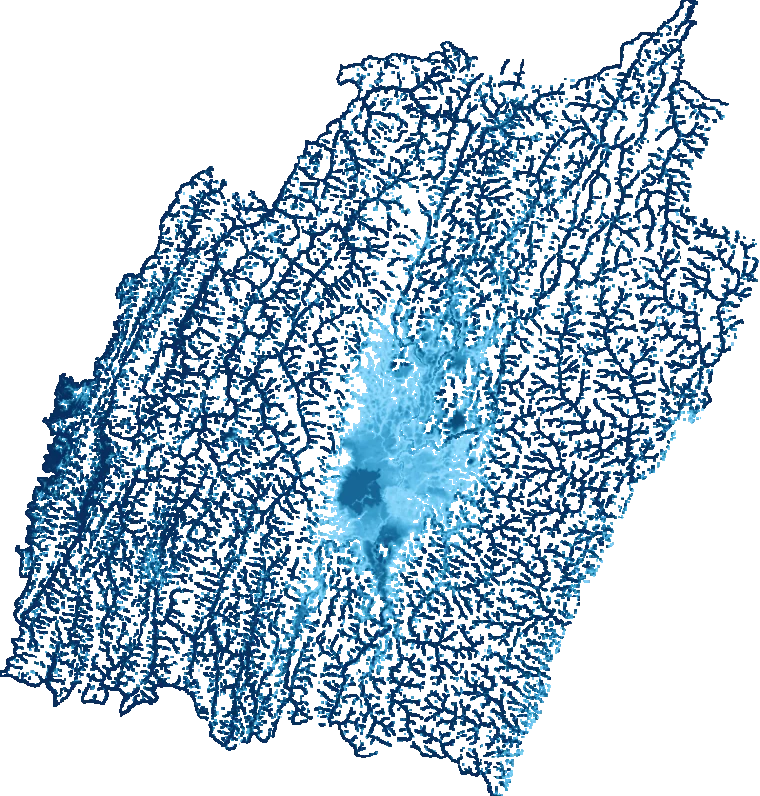
The colour shows how deep the water gets. Lighter blue is shallower water; deeper, darker blue means deeper — and more dangerous — flooding. Anywhere shaded is expected to take on some water in a 1% (100-year) event; the shade tells you roughly how much. Click a point on the map for the exact modeled depth there.
ShallowDeep
Is this an official government flood map?
No. It is an open, independent, modeled flood hazard atlas built by NEER for public awareness and planning context. Always defer to official local authorities for regulatory or emergency decisions.
How accurate is it?
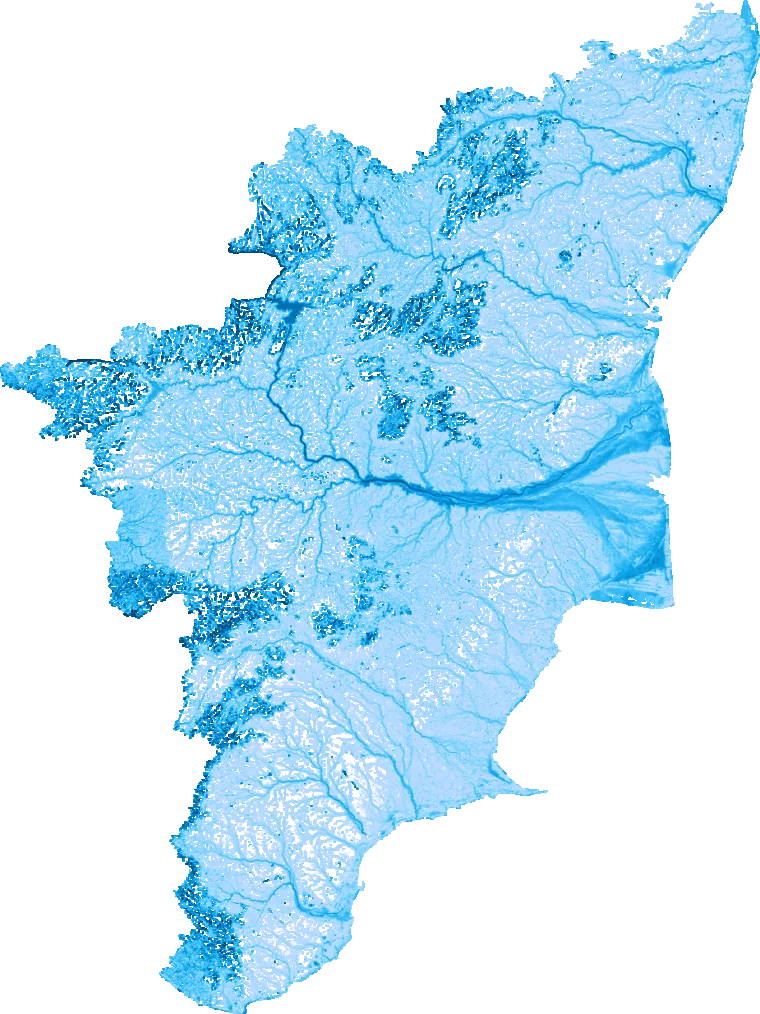
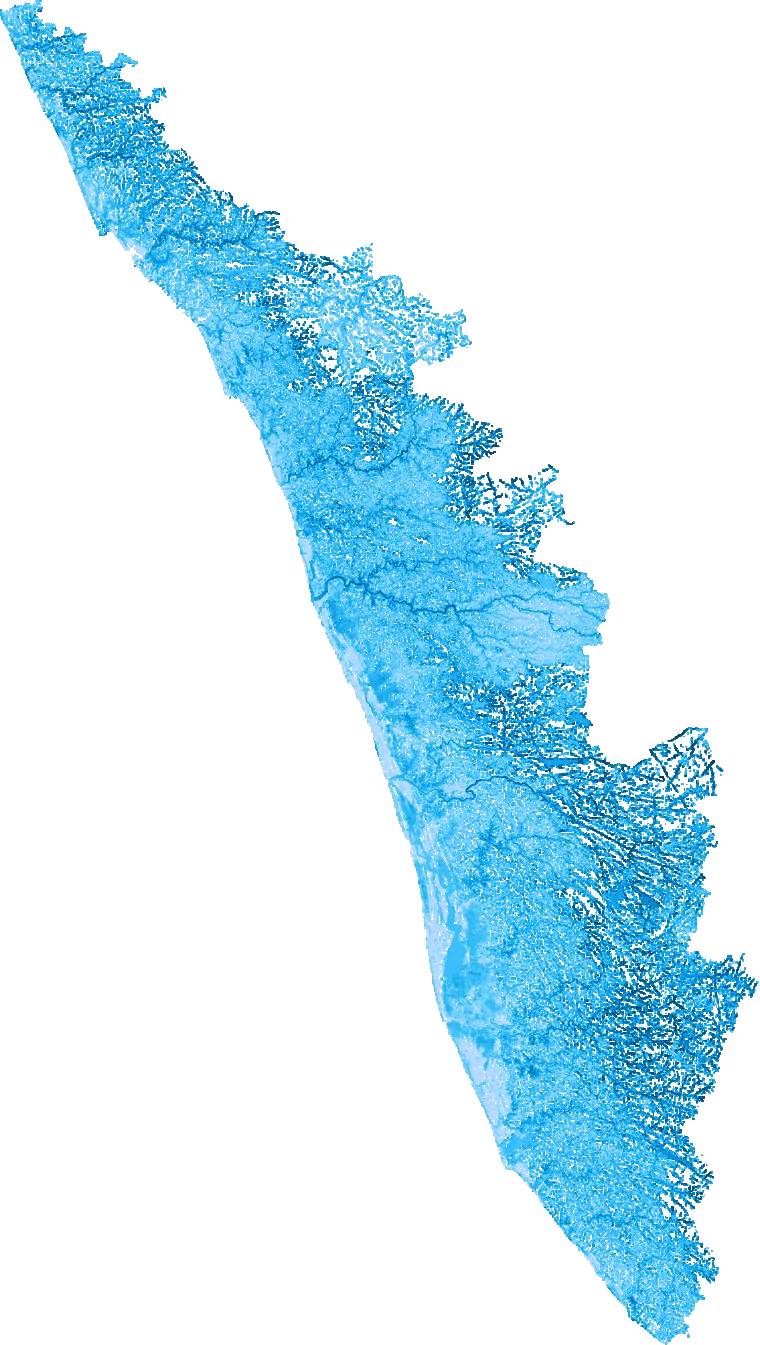
The underlying NEER DEM reaches sub-meter to ~1.6 m accuracy in the atlas states (Tamil Nadu 1.04 m, Kerala 1.65 m corrected MAE vs ICESat-2), at near-zero bias. The flood layer is modeled on top of that at ~30 m, so treat it as regional hazard screening rather than parcel-level truth.
The map shows my area flooding, but I've never seen it flood. Why?
Three reasons, usually. First, this is the 1% (100-year) event — a rare, severe flood. You can live somewhere for decades and never witness it, and that does not mean the risk is zero. Second, the map shows modeled hazard — where water would go in that extreme event — not a record of floods that have already happened. Third, at ~30 m resolution it cannot see every wall, embankment, or drain that might protect a specific building. Read it as “this area could flood in a severe event,” not “this will flood.”
My area floods often, but the map doesn't show it. Why?
This layer models one specific thing: the 1% annual-chance river and rainfall flood. It does not capture chronic, local flooding from blocked drains, overwhelmed urban stormwater, very localized low spots, or small channels below the ~30 m grid. Frequent street flooding from poor drainage is real — it is simply a different problem than the large, rare event this map is built to show. That gap is exactly why we publish our limitations alongside the map rather than hide them.
I'm in the 100-year floodplain — what should I do?
Plan, don’t panic — this is a hazard screen, not a prediction that your home will flood. A few sensible steps: (1) Confirm locally — at ~30 m the map can’t see your exact plot, which may sit higher or lower, so check with local authorities and your own experience. (2) Be ready — know your nearest higher ground and route to it, sign up for any local flood warnings, and keep documents, medicines and an emergency kit handy. (3) Protect the building — where you can, raise electrical points and valuables above likely water levels, keep nearby drains and channels clear, and consider barriers or seals for doors and openings. (4) Building or buying? Factor it in — a higher plinth and good site drainage go a long way. (5) Look into home insurance — India has no standalone flood policy, but standard home cover (like IRDAI’s Bharat Griha Raksha) already includes flood damage under “STFI” perils. Very few households carry any cover, so it’s worth knowing the option exists.
⚠A flood is happening right now — what do I do?
If water is rising and life is at risk, get to higher ground immediately — do not wait.- Move up and out. Head to the highest safe ground or upper floor you can reach. Leave early; don’t wait to see how bad it gets.
- Never enter floodwater. Don’t walk, swim or drive through it. Just 15 cm (6 in) of moving water can knock you off your feet; 30 cm (2 ft) can sweep away a car. If you can’t see the road, turn around.
- Beware electricity. Stay away from fallen power lines, electric poles and submerged outlets — electrocution is a real flood danger. Switch off mains power if you can do so safely.
- Keep clear of drains, canals and rivers. Currents and open drains are hidden killers during floods.
- Trapped indoors? Go to the highest floor and signal for help. Move onto the roof only if water keeps rising — don’t shut yourself in a windowless top room.
- Follow the authorities. Obey evacuation orders and official alerts.
Emergency numbers (India): 112 — all-India emergency · 108 — ambulance · 1077 — district disaster control room.
What can actually be done to reduce flood risk?
It spans scales, and it’s mostly about planning ahead. City and regional level: keep new development out of the highest-hazard zones, protect and restore natural drainage (wetlands, floodplains, lakes, urban green space that soak up water), and invest in stormwater drainage, embankments and early-warning systems where they matter most. Building level: elevated plinths, flood-resilient materials, protected utilities. None of it is quick or cheap — chronic urban flooding often needs sustained drainage investment — which is exactly why knowing where the risk concentrates matters: it lets planners aim limited budgets at the places and people most exposed. That prioritization is what this atlas is built to support.
Is it free? Can I use it?
Yes — it is free and public. The methodology and source data are documented and openly licensed (see attributions). Get in touch if you want to collaborate or need the underlying data.
Which states and return periods are available?
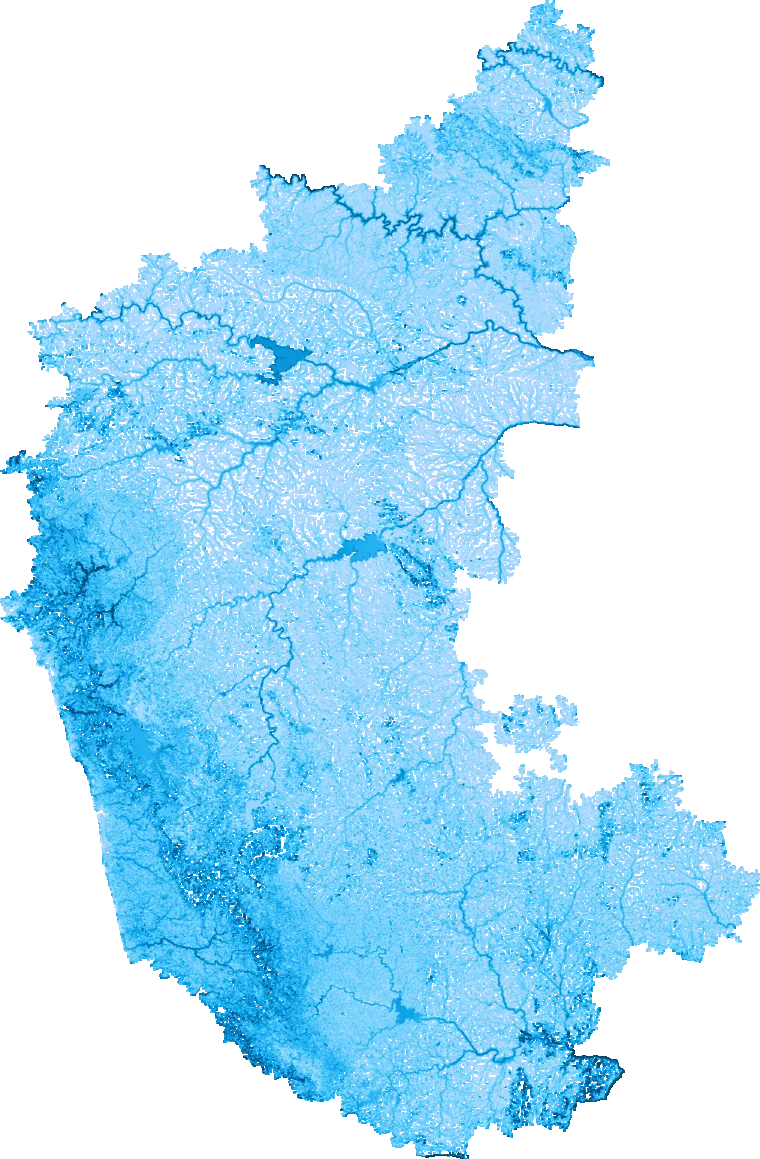
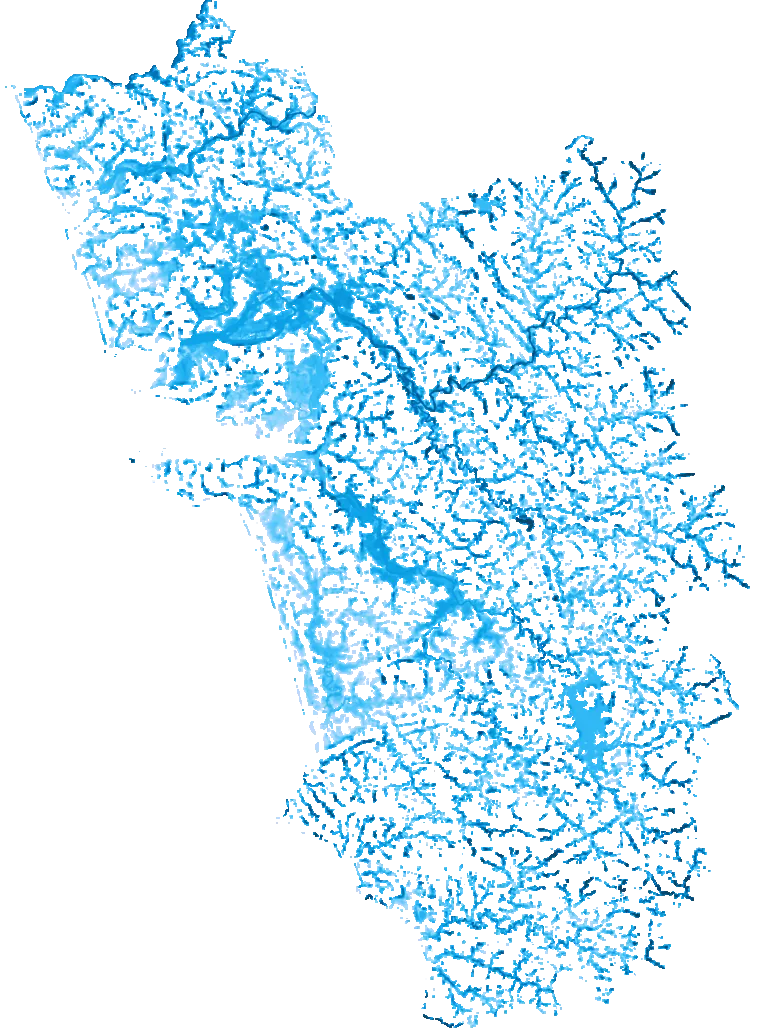
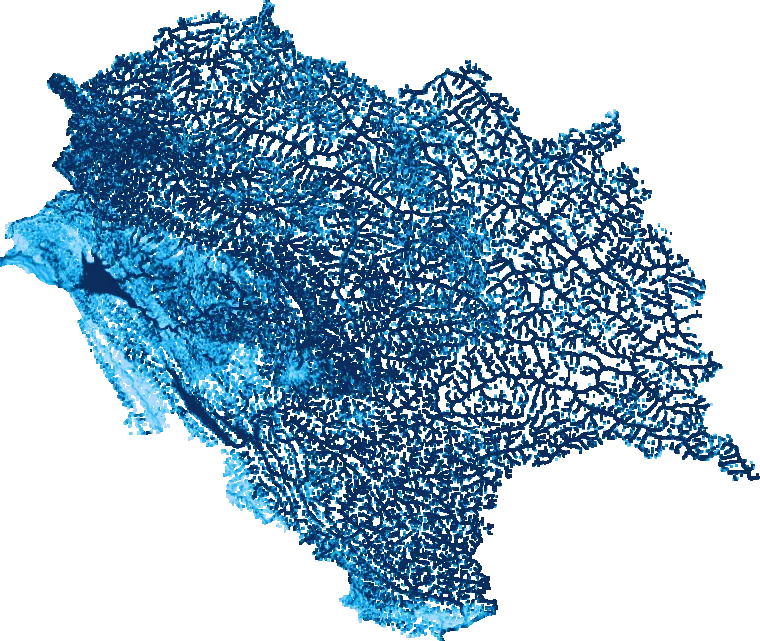
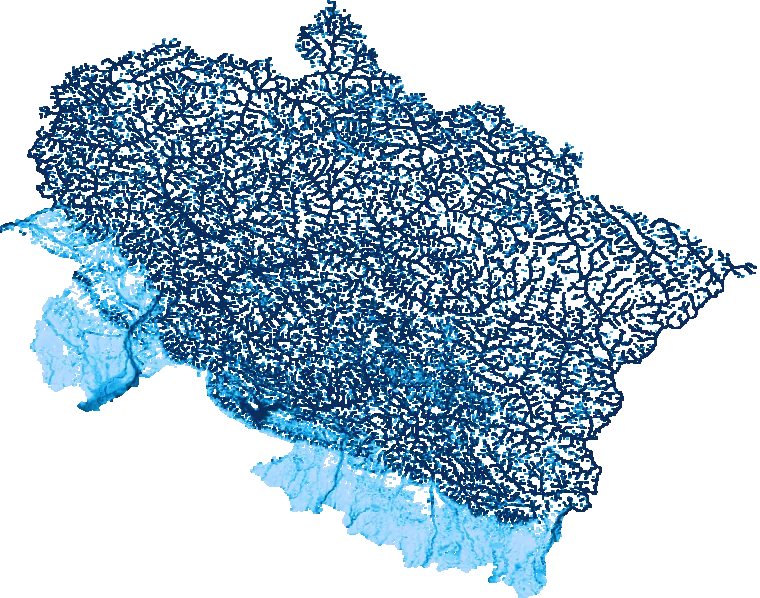
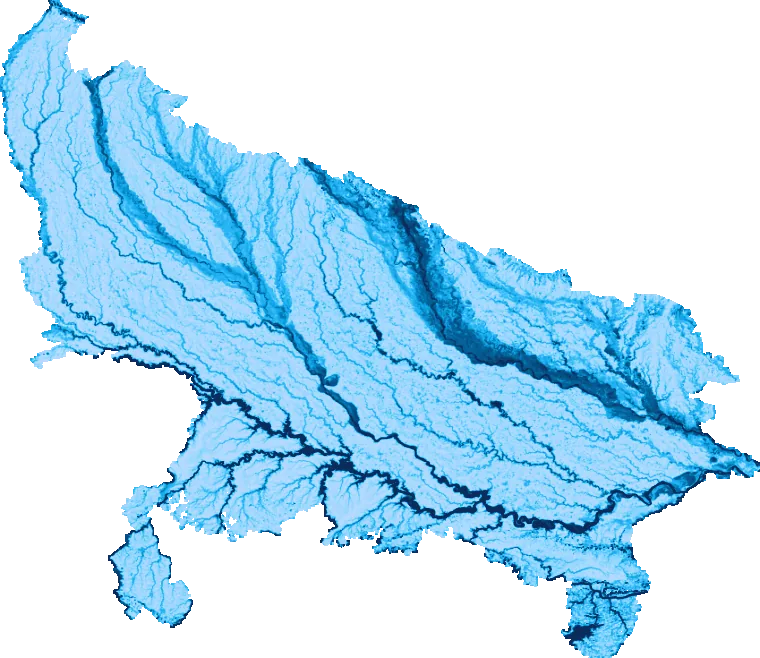
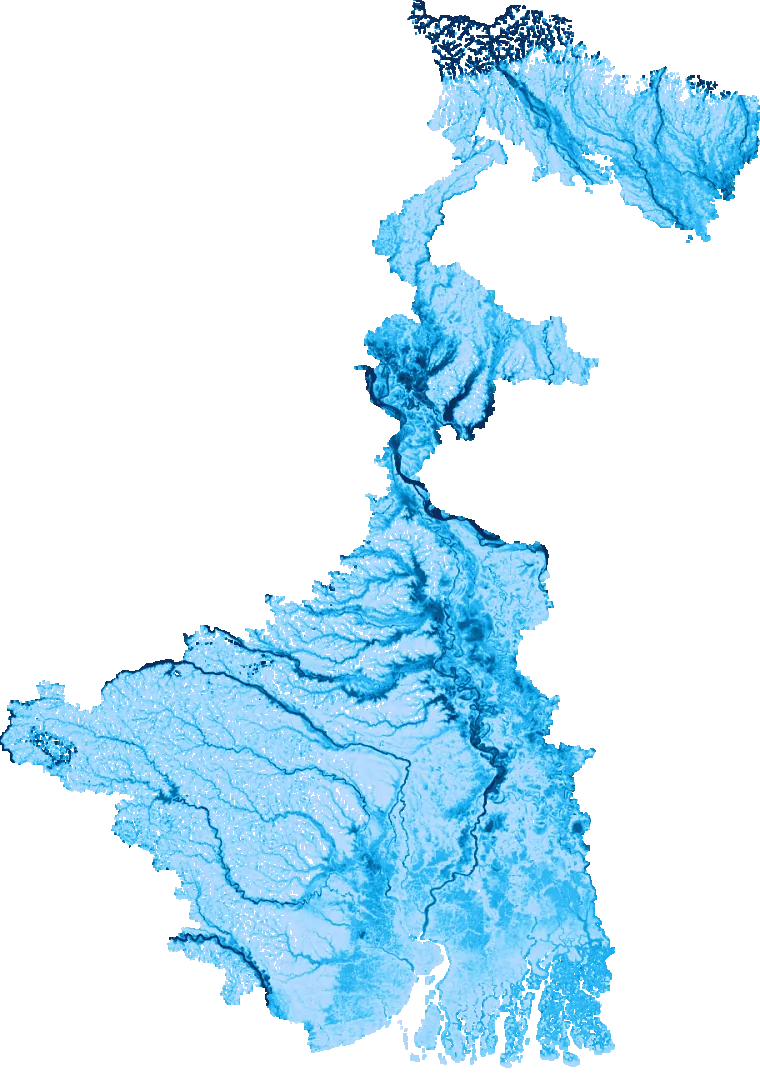
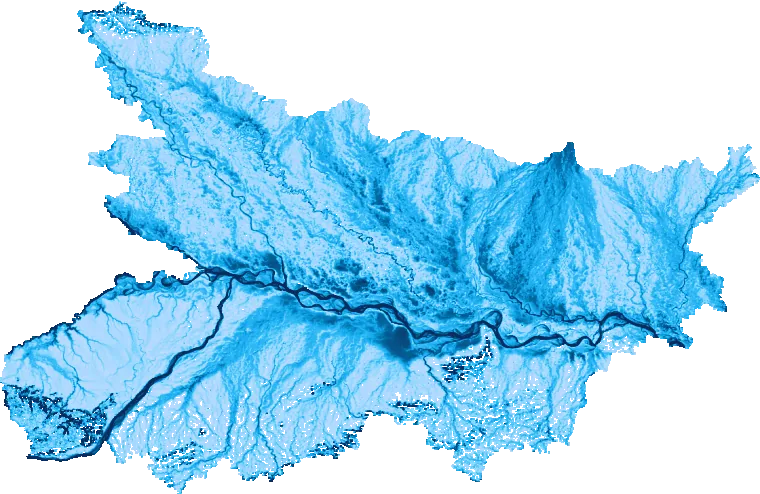
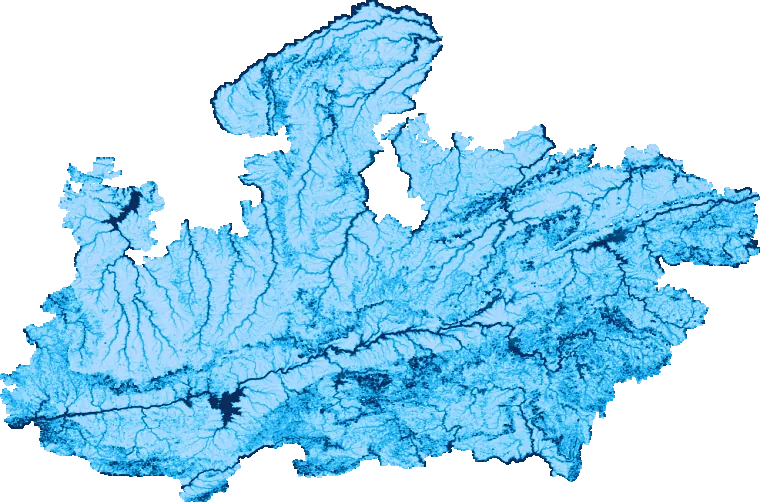
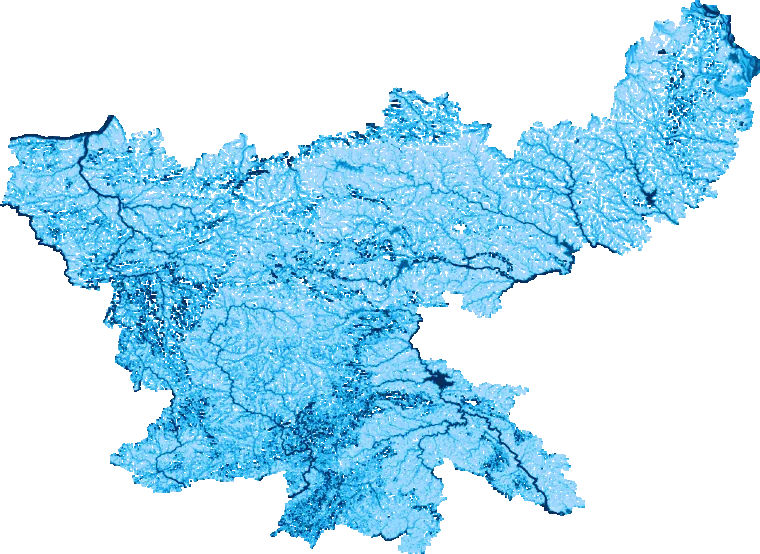
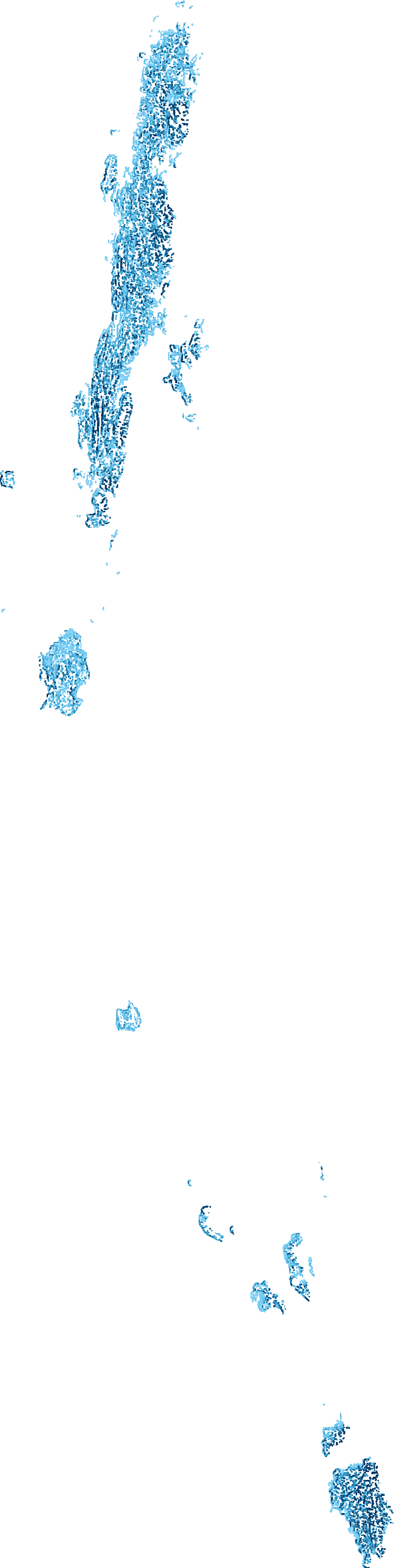
Free today: the 100-year (1% annual chance) flood layer now spans all 36 states and union territories — the whole Indo-Gangetic plain (Uttar Pradesh, Bihar, West Bengal, Punjab, Haryana, Delhi), the west (Rajasthan, Gujarat, Madhya Pradesh), the Himalaya (Jammu & Kashmir, Ladakh, Himachal Pradesh, Uttarakhand, Sikkim), the east (Jharkhand, Odisha, Chhattisgarh), the Northeast (Assam, Arunachal Pradesh, Meghalaya, Manipur, Mizoram, Nagaland, Tripura) and the south (Tamil Nadu, Andhra Pradesh, Telangana, Karnataka, Kerala, Goa) plus the islands (Andaman & Nicobar, Lakshadweep), Puducherry, Chandigarh and Daman, Diu & DNH. Interactive maps are live for the southern and central states; the newest additions show data and analysis now with maps following. Other return periods — 2, 5, 10, 25, 50, 500 and 1000-year — and full property-level risk are available from NEER on request.